The Belfast Fleadh demonstrated what music, culture and shared experiences can do for a place. Northern Ireland’s towns and villages may not attract one million people, but most already have the ingredients needed to create a successful festival of their own.
The idea is simple: use the people, venues, clubs and businesses already there to bring the community together, celebrate the good things in life and attract new spending into the area.
Start with youth sport
A youth sports tournament can provide the festival’s main source of visitors.
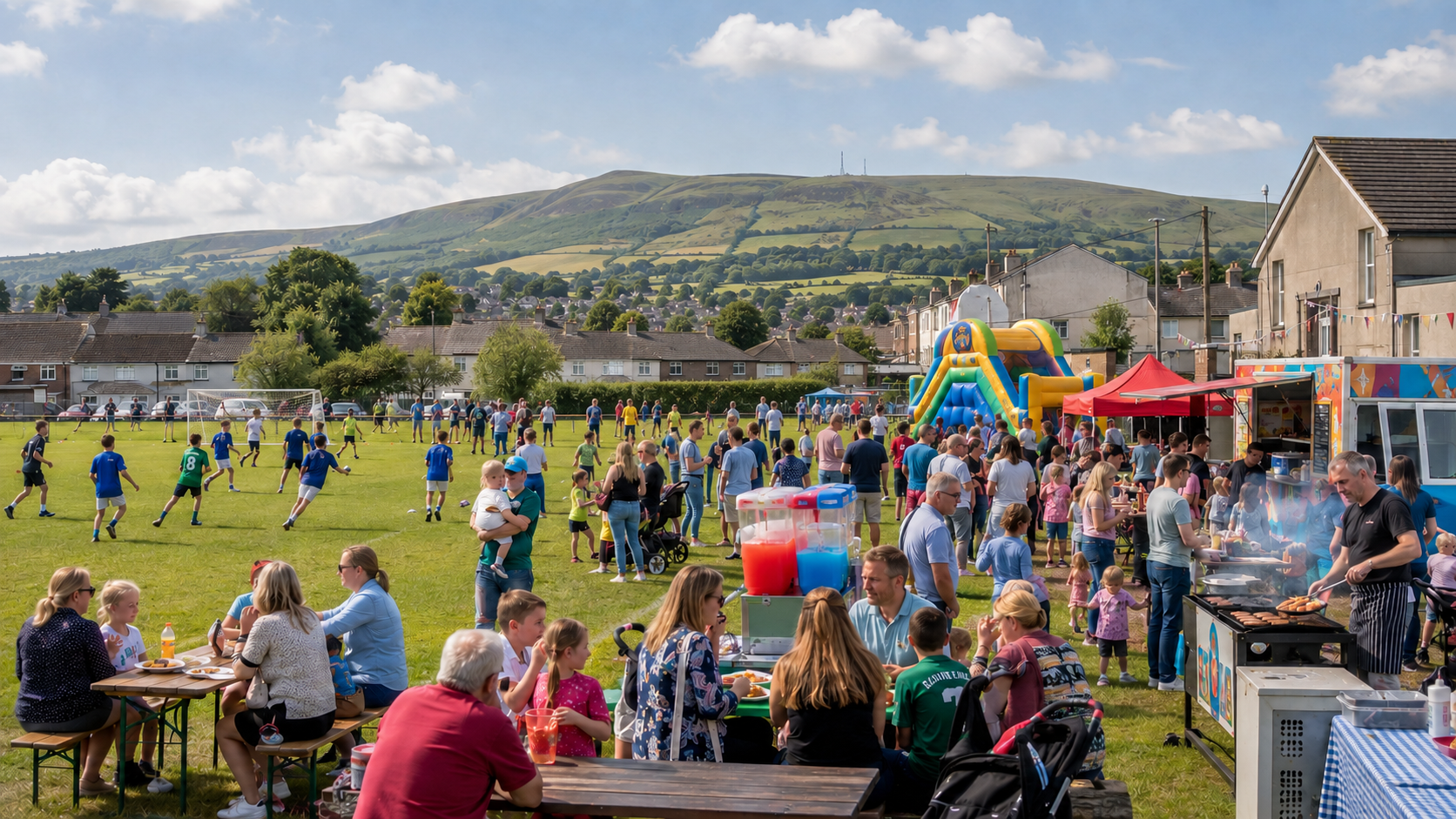
Invite neighbouring GAA clubs for a tournament and organise rugby or football competitions on nearby pitches. Encourage players to bring parents, grandparents and siblings rather than travelling only with their team.
While the matches are taking place, families could enjoy bouncy castles, games, a barbecue, food trucks, ice cream and slushee drinks, all supplied by businesses from the local area. The more visiting teams and families the festival attracts, the more new money enters the town.
Give local performers a stage
The entertainment programme could include:
- Local musicians and emerging bands
- Wedding bands playing the music they always wanted to play
- Marching bands and céilí bands
- School choirs and dance groups
- Traditional musicians and community performers
A sports hall could host a family show. A church or community hall could provide workshops and children’s activities. Local pubs could run music sessions, quizzes and cultural events. The venues and talent already exist; a festival gives people a reason to bring them together.
Sample one-day local festival timetable
This example combines sport, family entertainment and ticketed evening events without requiring one large purpose-built venue.
| Time | Activity | Suggested location | Local opportunity |
|---|---|---|---|
| 8.30am–9am | Team registration and visitor arrival | Sports club or community centre | Coffee van, bakery and breakfast suppliers |
| 9am–12.30pm | Youth GAA, football and rugby fixtures | Main ground and nearby pitches | Visiting teams bring families into the town |
| 10am–5pm | Family festival zone | Sports hall, club grounds or town park | Inflatables, games, face painting and family entertainment |
| 12pm–2pm | Local food and lunch market | Family zone or town square | Barbecue, food trucks, ice cream and slush drinks |
| 1pm–3pm | Local music and dance showcase | Community stage or hall | Bands, choirs, dancers and production suppliers |
| 3pm–5pm | Sports finals, presentations and band performances | Main sports ground | Keeps teams and families in the area longer |
| 5pm–7pm | Dining, accommodation check-in and shuttle period | Town centre and neighbouring villages | Restaurants, pubs, B&Bs, buses and taxis |
| 7.30pm–9pm | Ticketed comedy show | Community hall or local theatre | Ticket revenue and an evening audience |
| 9.15pm–late | Culture nights, pub sessions and local headline band | Staggered across local venues | Hospitality, late transport and overnight stays |
Create a full day, not one isolated event
Good scheduling encourages visitors to stay longer and attend several activities. A ticketed comedy show could be followed by a music session or culture night in another venue. Staggered starting times would allow visitors to enjoy both.
Local bus companies could provide shuttles between nearby towns, sports grounds and entertainment venues. Taxi companies could help people return safely to local bed and breakfasts, hotels and guest accommodation. This spreads the opportunity across transport, hospitality and accommodation businesses—not only the main festival site.
Keep the spending local
Organisers should speak to local suppliers before searching farther away. Use local event decorators, caterers, food trucks, entertainers, equipment-hire companies, photographers and transport providers where possible. Invite neighbouring businesses when the town cannot meet all the demand.
The objective is to attract spending from outside the area and keep as much of it circulating locally as possible.
Checklist for the first organising meeting
The first meeting should finish with named responsibilities and clear deadlines—not only a list of ideas.
- Agree the festival’s purpose, audience and working name.
- Appoint leads for the programme, finance, suppliers, safety and marketing.
- Choose a provisional date and check for clashes with nearby events.
- Select the anchor event and identify the clubs or teams to invite.
- Check venue availability, capacities, access, power and wet-weather options.
- Draft the timetable and estimate attendance at each location.
- Contact the council about entertainment, food, trading, noise and road requirements.
- Build a basic budget covering costs, ticket income, sponsorship and contingency.
- List local performers, food vendors, activity providers and equipment suppliers.
- Plan parking, shuttles, taxis, accessible transport and accommodation links.
- Assign responsibility for insurance, safeguarding, first aid, security and emergencies.
- Decide how visitor numbers, home areas, ticket sales and supplier feedback will be measured.
Start small and organise it properly
A successful first year does not need to be enormous. One sports tournament, a family zone, several music venues and one ticketed evening show would be enough to prove the idea.
Organisers should involve their council early and plan insurance, safeguarding, first aid, traffic, noise, waste and wet-weather arrangements. Music, comedy and other public entertainment may require council licences, while activities affecting public roads can require separate approval. Check Northern Ireland event regulations.
The best local festivals celebrate what is already good about a place. Your town probably has everything it needs—someone simply has to bring it together.