Northern Ireland Wedding Planning Guide
Humanist Celebrants Northern Ireland: Legal Weddings, Costs and What to Expect
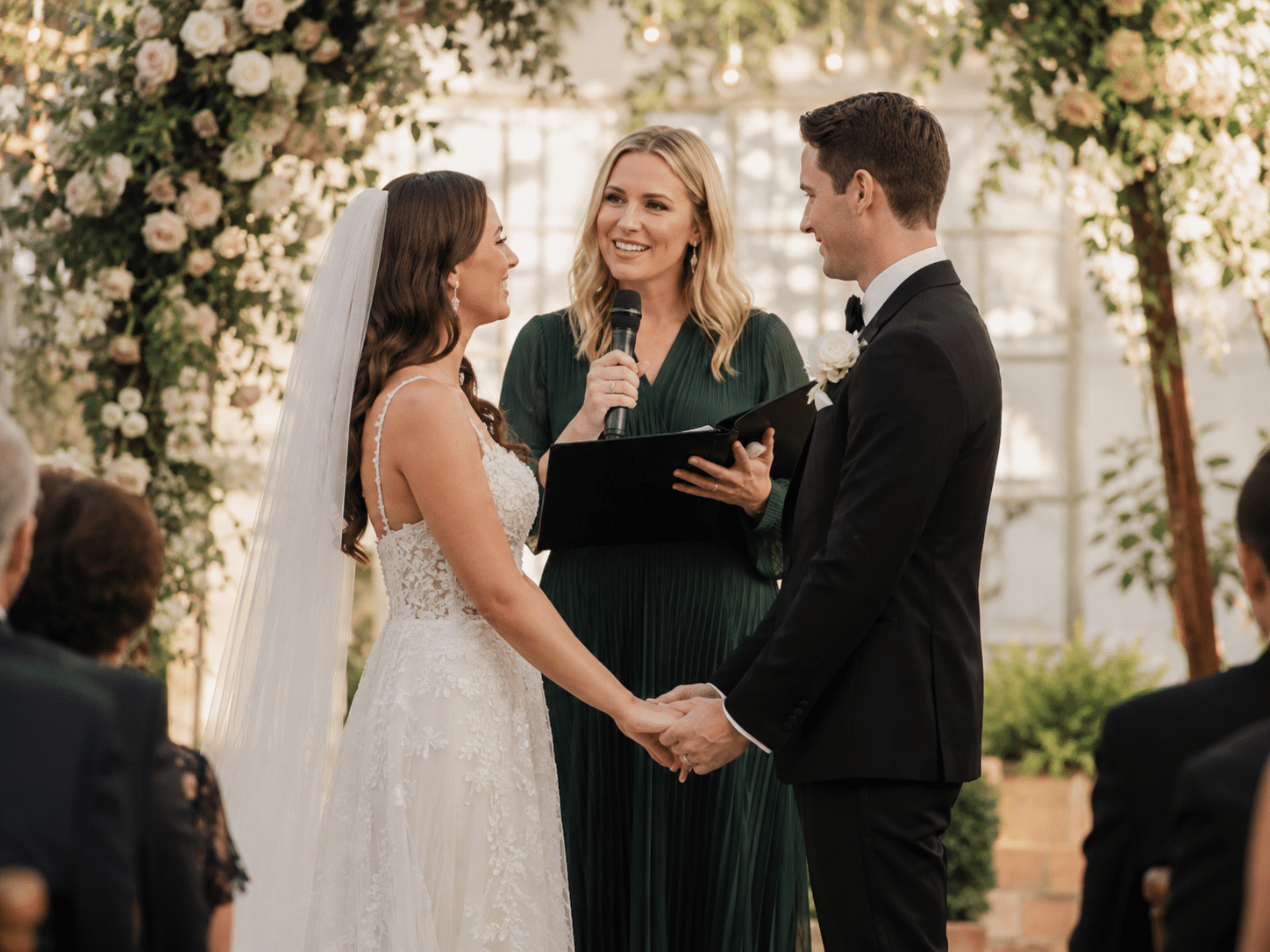
A humanist wedding gives couples the freedom to create a highly personal, non-religious ceremony based on their relationship, values and plans for married life.
Humanist marriages can be legally binding in Northern Ireland. However, there is an important difference between a person who can lead a meaningful symbolic ceremony and an officiant who is legally authorised to solemnise a marriage.
This guide explains what humanist ceremonies involve, where they can be held, how much they cost and how to check that your chosen celebrant can legally conduct your marriage.
The main point
A humanist wedding can be your legal marriage ceremony in Northern Ireland, provided the person conducting it is registered as an officiant and authorised by the Registrar General.
What is a humanist wedding ceremony?
A humanist wedding is a non-religious ceremony designed around the couple rather than a standard religious liturgy or fixed civil ceremony script.
The celebrant normally meets the couple before the wedding, learns about their relationship and writes a personalised ceremony. The final service can be warm, formal, humorous, emotional or relaxed.
A humanist ceremony may include:
- The story of how the couple met
- Personal vows and promises
- An exchange of rings
- Readings, poetry and music
- Contributions from family members or friends
- Recognition of absent or deceased loved ones
- Handfasting, candle lighting or another symbolic ritual
- Involvement from children or members of a blended family
Couples do not necessarily need to identify as committed humanists. They should, however, be comfortable with a ceremony based on non-religious humanist values.
Are humanist weddings legal in Northern Ireland?
Yes. A properly conducted humanist marriage can be legally recognised in Northern Ireland without the couple needing a separate register-office ceremony.
For the marriage to be legally valid:
- The celebrant must be registered and authorised to conduct belief marriages.
- Both partners must submit their marriage notice forms and required documents.
- The registrar must issue a marriage schedule.
- The schedule must be available before the ceremony.
- The couple, authorised officiant and two witnesses must sign the schedule.
- The completed schedule must be returned to the relevant registration office.
The legal minimum notice period is normally 28 days, but official guidance recommends submitting notice approximately eight weeks before the wedding. Couples who were previously married or in a civil partnership are advised to allow longer.
Legal update
As of July 2026, humanist marriages are already legally recognised under the arrangements operating in Northern Ireland. Legislation is progressing through the Northern Ireland Assembly to place belief marriages more explicitly within the permanent statutory framework.
How popular are humanist weddings in Northern Ireland?
Humanist weddings have moved well beyond being a niche option.
There were 1,112 humanist marriages in Northern Ireland during 2024. That represented approximately 15% of all marriages registered that year.
The 5,000th legally recognised humanist marriage in Northern Ireland took place in October 2025, only seven years after the current arrangements became widely available.
Their growth reflects a wider demand for ceremonies that feel personal, flexible and less restricted by traditional wedding formats.
Current humanist wedding trends
The main trend is not one particular ritual or wedding style. It is couples wanting greater control over what is said, where the ceremony happens and who takes part.
Personal storytelling
Couples are placing more emphasis on their own story, including how they met, important moments in the relationship and what marriage means to them.
Outdoor and unusual ceremony locations
Gardens, private estates, woodland settings, hotel grounds, beaches and family farms can all be considered, subject to permission and practical arrangements.
Ceremony and reception at one venue
Holding the ceremony and reception at the same location can reduce travel, simplify the schedule and give the couple more time with guests.
Children and blended families
Children may make promises, take part in a handfasting, give a reading or be included in a family unity ceremony.
Symbolic rituals
Handfasting remains popular, but couples also use ring warming, candle lighting, tree planting, sand ceremonies and memory boxes.
Smaller weddings and elopements
Humanist ceremonies work well for intimate weddings because the service can still feel substantial and meaningful without a large guest list or formal venue.
Can you have a humanist wedding in a church?
Northern Ireland’s rules allow a religious or belief marriage to take place anywhere in Northern Ireland with the agreement of the authorised officiant.
However, this does not give a couple an automatic right to use an active church.
A church is controlled by its owner, trustees, minister, parish or denomination. Some churches will only permit ceremonies conducted according to their own religious tradition and may not allow a non-religious humanist service.
A deconsecrated church, former chapel or converted church wedding venue may be more straightforward. Couples should obtain written permission from the venue before confirming the celebrant or announcing the location.
Where can a humanist ceremony take place?
Subject to the officiant’s agreement and the property owner’s permission, possible locations include:
- Hotels and licensed wedding venues
- Private homes and gardens
- Country estates
- Family farms
- Woodland settings
- Beaches and coastal locations
- Restaurants and private dining venues
- Historic buildings
- Purpose-built outdoor ceremony areas
Outdoor weddings should always have a weather backup, suitable seating, accessible paths and a clear plan for sound amplification.
Advantages of choosing a humanist celebrant
- Personal ceremony: the script can be written around your relationship rather than following a fixed format.
- Flexible venue choice: you are not limited to a registration office or traditional religious building.
- Legal and ceremonial elements together: an authorised celebrant can complete the legal marriage during the personalised ceremony.
- More control over the wording: couples can choose their readings, music, promises and overall tone.
- Family involvement: children, parents and friends can be included in meaningful ways.
- Inclusive format: the ceremony can respect relatives from different religious or cultural backgrounds without adopting a specific religion.
Possible disadvantages
- Higher ceremony fee: a personalised celebrant service will often cost more than the basic legal ceremony fee.
- More preparation: couples need to attend planning meetings, approve the script and make decisions about vows and readings.
- Popular dates book early: experienced celebrants can be reserved more than a year in advance.
- Family expectations: some relatives may prefer hymns, prayers or a traditional church service.
- Venue permission: flexibility does not remove the need to obtain permission from the venue or landowner.
- Authorisation must be checked: not every person using the title “celebrant” can legally solemnise a marriage.
How much does a humanist wedding cost in Northern Ireland?
Humanists UK gives a general humanist wedding celebrant range of approximately £450 to £1,500.
The final quote may depend on the celebrant’s experience, travel distance, preparation time, ceremony length, rehearsal requirements and the amount of personalisation involved.
A celebrant’s fee may include:
- An initial consultation
- One or more planning meetings
- Researching and writing the ceremony
- Revisions to the script
- Help writing vows
- Attendance at a rehearsal
- Conducting the ceremony
- A presentation copy of the final script
Ask whether travel, accommodation, rehearsals and date changes are included before paying a deposit.
Humanist celebrant versus registrar-led ceremony costs
The figures below are a planning guide rather than fixed prices. Registrar charges vary between councils, while individual celebrants set their own fees.
| Cost or feature | Humanist ceremony | Registrar-led ceremony |
|---|---|---|
| Ceremony provider | Independent authorised humanist celebrant | Council registrar or deputy registrar |
| Provider fee | Common guidance range of £450–£1,500 | Set by the relevant council and affected by the venue, day and time |
| Marriage notice | Currently £22 per person, or £44 per couple | Currently £22 per person, or £44 per couple |
| Belfast City Hall example | Not applicable. The couple pays their celebrant and selected venue separately. | Published total: £430 weekday, £706 Saturday or £760 on a bank holiday |
| Personalisation | Extensive personalisation is normally included | Usually more structured, with council rules on permitted wording and content |
| Venue flexibility | Broad flexibility, subject to permission and officiant agreement | Normally limited to council ceremony rooms and venues approved under the relevant council arrangements |
| Possible extras | Travel, accommodation, rehearsal, rescheduling and ceremony rituals | Room hire, registrar attendance, approved venue charges and weekend supplements |
Belfast figures are included as a practical example. Always request an up-to-date written quote from your own council and venue.
How to check that a celebrant can legally marry you
The title “wedding celebrant” does not automatically mean that someone can conduct a legal marriage.
Celebrant-checking checklist
☐ Ask whether the person is currently authorised to solemnise belief marriages in Northern Ireland.
☐ Ask which humanist or belief organisation has nominated or accredited them.
☐ Confirm that they are authorised by the Registrar General rather than only trained to conduct symbolic ceremonies.
☐ Ask whether they can sign the officiant section of your marriage notice paperwork.
☐ Contact the registration office for the council area where the wedding will take place and ask it to confirm the officiant’s status.
☐ Request a written contract showing the date, location, fee, cancellation terms and services included.
☐ Confirm who will check the marriage schedule before the ceremony.
☐ Confirm who is responsible for returning the signed schedule after the wedding.
Questions to ask before booking
- Are you authorised to conduct legal humanist marriages in Northern Ireland?
- Are you available for our date and location?
- How many planning meetings are included?
- Will you write the complete ceremony script?
- How many revisions can we request?
- Can you help us write our vows?
- Is a rehearsal included?
- Are travel and accommodation included in the quote?
- What happens if you are ill or unable to attend?
- What are your cancellation and postponement terms?
A simple booking timeline
9–18 months before
Research celebrants, confirm the venue permits a humanist ceremony and reserve your preferred date.
6–9 months before
Begin planning the structure, readings, rituals, music and family involvement.
Around 8–12 weeks before
Submit your marriage notices and supporting documents to the registrar for the district where the wedding will take place.
Final month
Approve the script, finalise vows, confirm witnesses and complete any rehearsal.
Before the ceremony
Collect the marriage schedule when instructed and make sure it is given to the officiant before the ceremony begins.
Ready to compare local celebrants?
View humanist celebrants covering weddings across Belfast and Northern Ireland.
Frequently asked questions
Is a humanist wedding legally binding in Northern Ireland?
Yes. It can be legally binding when the ceremony is conducted by an officiant who is registered and authorised to solemnise belief marriages, and the couple completes the required marriage notice and schedule process.
Do we need a separate register-office ceremony?
No. A separate civil ceremony is not normally required when an authorised humanist officiant conducts the legal marriage and all paperwork is completed correctly.
Can a humanist wedding be held outdoors?
Yes. A belief ceremony may take place anywhere in Northern Ireland with the agreement of the authorised officiant and permission from the property or landowner.
Can a humanist wedding take place in a church?
It may be legally possible, but the church owner, trustees, parish or denomination must permit it. Many active churches only allow ceremonies conducted according to their own religious rules.
How much does a humanist celebrant cost?
General guidance places humanist wedding celebrant fees at approximately £450 to £1,500. Travel, accommodation, rehearsals and complex ceremony requirements may cost extra.
How long does a humanist wedding ceremony last?
Most last approximately 20 to 45 minutes, depending on the number of readings, rituals, stories and contributions included.
Can we include a prayer or religious reading?
Humanist ceremonies are non-religious. Some celebrants may allow a limited contribution reflecting a family member’s beliefs, but this should be discussed before booking.
Do we need to be humanists?
You do not necessarily need to use the label humanist, but you should be comfortable with a non-religious ceremony based on humanist values.
How do we check whether a celebrant is authorised?
Ask the celebrant to confirm their current authorisation and the organisation that nominated them. The safest additional check is to contact the registration office for the council district where your wedding will take place.
How far in advance should we book?
For a popular summer Saturday, booking 12 to 18 months ahead is sensible. Shorter-notice bookings may be possible for weekdays, smaller weddings and off-peak dates.
Official Northern Ireland marriage guidance
Check the latest legal requirements, marriage notice process and paperwork directly with NI Direct before making final arrangements.